
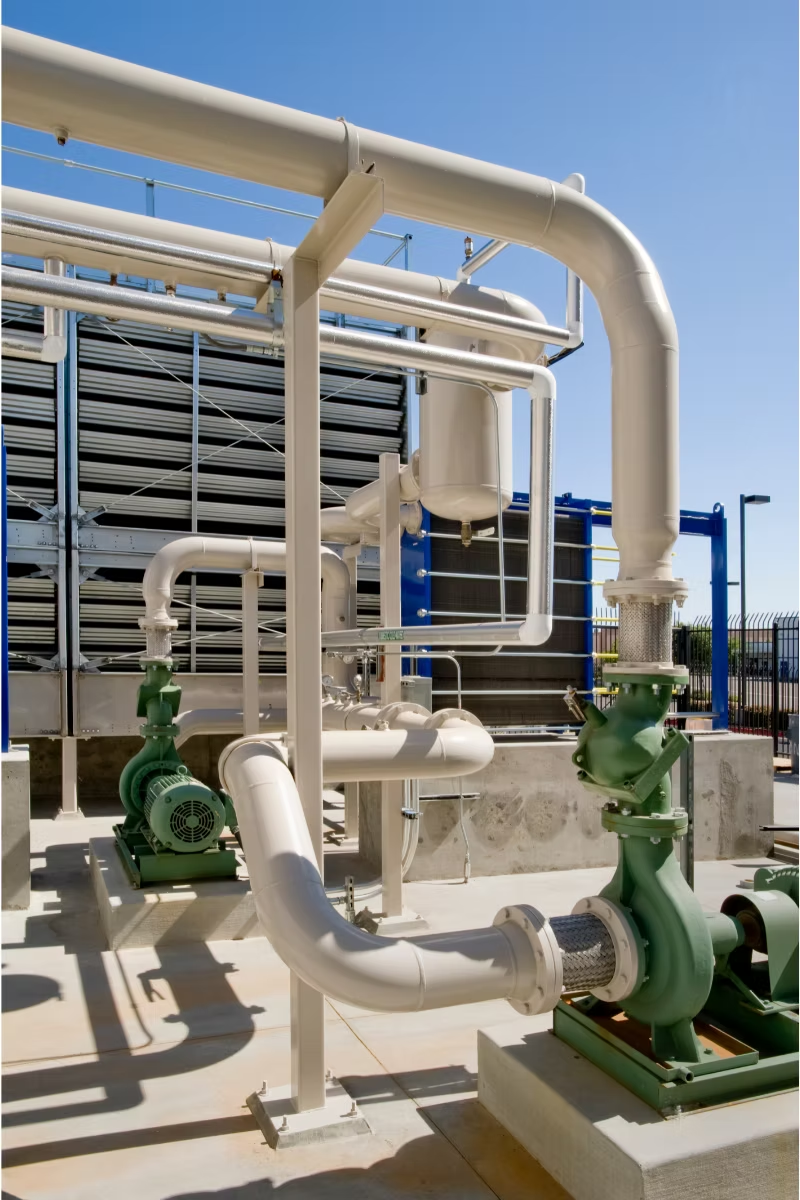
A process chilled water loop circulates cooled water or an appropriate fluid through equipment that needs temperature control. The system typically includes a chiller, pumps, piping and controls; its exact arrangement depends on the process.
Installing one involves more than selecting a chiller. Existing plant infrastructure, process-fluid conditions, electrical supply, pumping requirements and ongoing maintenance all influence the design. The nine considerations below are adapted from HMS’s original Wix checklist, with technical statements clarified where necessary.
The U.S. Department of Energy describes process cooling as a system-level task in which chillers, pumps, cooling towers and controls must work together.
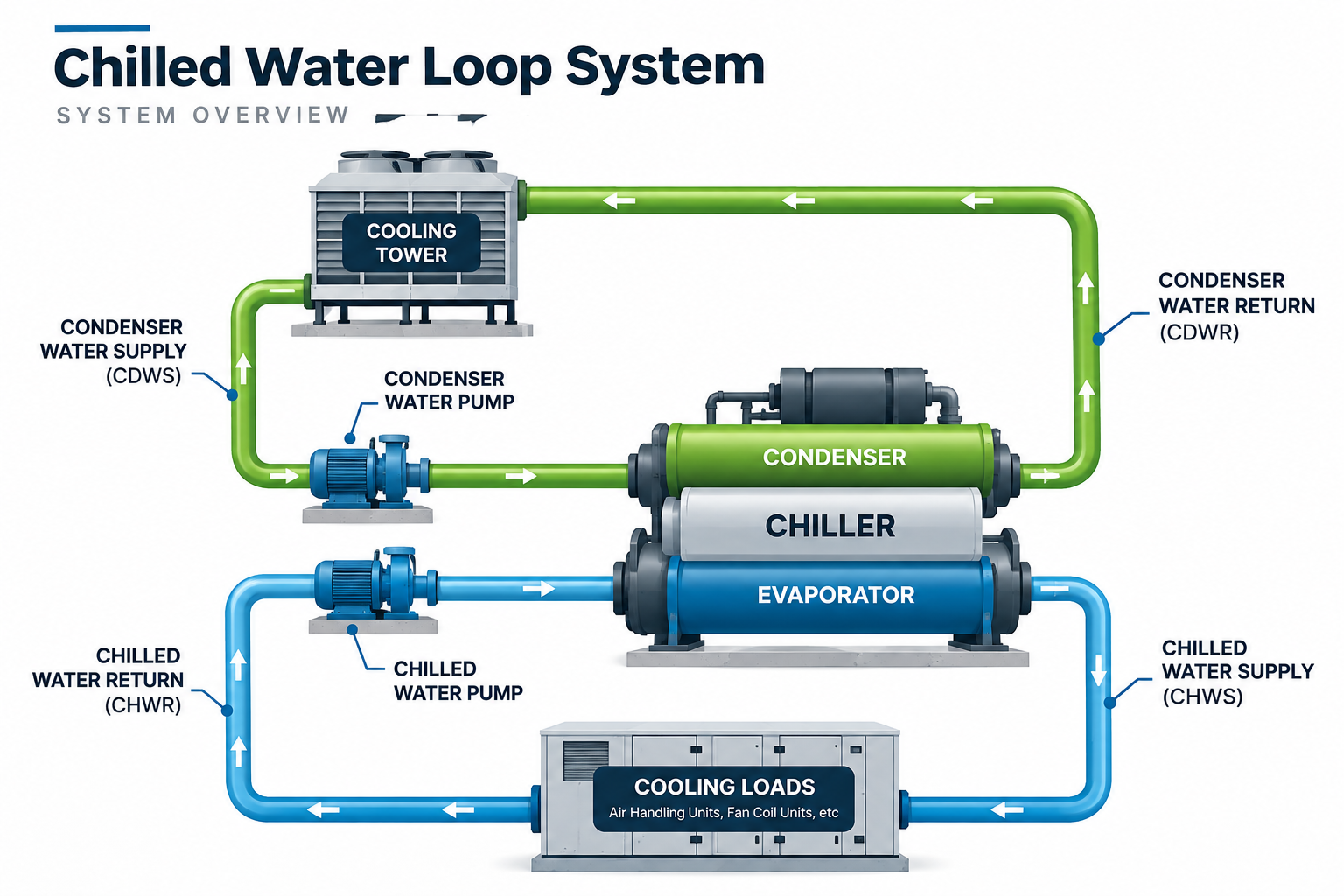
Plan equipment location and piping routes
Industrial facilities often have limited open space. Before selecting a location, review existing piping, electrical conduits, machinery, service access and the route needed to connect the chiller to the process.
- Identify a workable equipment location and piping route.
- Check the space needed for installation, access and ongoing maintenance.
- If indoor space is limited, evaluate an outdoor air-cooled chiller plant as an alternative to an indoor water-cooled arrangement.
Air-cooled and water-cooled configurations have different space, equipment and maintenance requirements; the right choice depends on the site and cooling load.
Select a chiller for the process load
Start with the process cooling requirement rather than assuming a particular compressor type is the right fit. The original HMS checklist highlights screw, magnetic-bearing and centrifugal technologies as options to consider, depending on the plant and load.
- Confirm required cooling capacity and operating conditions.
- Compare air-cooled and water-cooled solutions, including supporting equipment and maintenance.
- Review compressor technology and equipment footprint against the facility’s needs.
Screw compressors are positive-displacement machines and do not experience centrifugal-compressor surge in the same way. This alone does not determine the best selection. Large plants may favor water-cooled solutions, but avoid treating any single air-cooled capacity limit as universal; available products and shipping constraints vary by manufacturer.
For related technical education, see HMS commercial chiller training resources.
Verify power availability and grounding
A chiller location may look practical until electrical distribution is considered. Confirm that adequate power can be supplied to the proposed equipment location and determine where new conductors would need to run.
- Check available electrical capacity at the proposed location.
- Review conductor routing and distance, which can affect installation cost.
- Have qualified electrical personnel verify grounding and power-quality requirements, especially in older facilities.
Do not assume a transformer or a particular grounding correction is required without an electrical assessment.
Protect the chiller with appropriate heat exchangers
Some industrial processes circulate water containing chemicals or contaminants, or operate across temperatures unsuitable for direct circulation through the chiller. A separate heat exchanger may help isolate the process fluid from the chiller loop.
- Identify process-fluid chemistry, solids and expected temperature range.
- Evaluate shell-and-tube, plate-and-frame or brazed-plate designs for the specific duty and cleaning requirements.
- Confirm material compatibility, including any requirement for non-ferrous components.
The original Wix article favors shell-and-tube exchangers for particularly dirty process water because of cleaning access. Treat that as a design consideration, not a universal rule: exchanger selection depends on fluid conditions, fouling, pressure drop and maintenance access.
Confirm loop volume and temperature stability
Process cooling loads can change quickly. Check whether the system contains sufficient water volume for the selected chiller and the process operating profile.
- Calculate loop volume rather than assuming the piping provides enough.
- Review the manufacturer’s minimum system-volume and cycling requirements.
- If needed, evaluate a properly sized buffer or storage tank.
Buffer tanks are application-specific; they are not automatically required for every process loop.
Size pumps for flow and pressure drop
Process equipment and piping can create substantial pressure losses. Pump selection must account for required flow and the pressure drop across the full circuit.
- Establish required process and chiller flow rates.
- Account for piping, valves, heat exchangers and other components when evaluating pressure drop.
- Consider variable frequency drives (VFDs) where flow-control strategy and equipment requirements support their use.
The U.S. Department of Energy’s process-cooling guidance identifies variable-speed pumping and appropriate controls as potential energy-performance measures. Any variable-flow design must also respect the chiller manufacturer’s allowable flow range.
Plan water treatment and loop cleanliness
Water quality affects the condition of the chilled-water loop and heat-transfer equipment. Establish a treatment and inspection plan appropriate to the system and the process fluid.
- Review water chemistry and treatment requirements.
- Plan routine inspection and cleaning.
- Keep records of treatment, service and observed changes.
Learn more about related hydronic-system and preventive-maintenance training topics.
Coordinate controls and monitoring
The chiller, pumps, valves and process equipment need a coordinated operating strategy. Controls should support the required process temperatures, equipment protection and appropriate system sequencing.
- Define how equipment starts, stops and responds to process demand.
- Confirm the control interfaces between the chiller and connected equipment.
- Consider remote monitoring to provide visibility into operating status and alarms.
Remote monitoring can make system information easier to access, but it does not replace on-site troubleshooting or maintenance. HMS also provides building controls education.
Establish a maintenance schedule before startup
Include maintenance planning in the project rather than waiting until the system is operating. The original HMS article recommends major annual service around a planned shutdown or before the principal operating season, alongside routine operating inspections.
- Set service intervals according to equipment requirements and operating conditions.
- Schedule major work during a suitable plant shutdown where practical.
- Log operating measurements and review them during routine inspections.
- Consider a maintenance agreement based on equipment criticality and facility needs.
Maintenance may help identify developing issues and support reliable operation, but savings or longer equipment life cannot be guaranteed for every installation.
Frequently asked questions
What is a process chilled water loop?
It is a circulating fluid system that removes heat from industrial or commercial processes using a chiller, pumps, piping and related components.
Should a process plant use an air-cooled or water-cooled chiller?
That depends on the cooling load, available space, site conditions, supporting equipment and maintenance requirements. Neither type is universally best.
When might a buffer tank be needed?
A buffer tank may be considered when the loop volume is insufficient for the selected chiller’s operating requirements or the process load changes rapidly.
Can a VFD be used on a chilled water pump?
Yes, where the pump and control design support variable flow. The system must maintain flow within the chiller manufacturer’s specified limits.
Technical references
This article is based on the original HMS Wix checklist. The following references support the added technical context and qualifications:
- U.S. Department of Energy — Process Cooling and HVAC
- U.S. Department of Energy — Chiller Replacement: Performance Requirements (variable flow and minimum chiller flow)